4015698815719
4015698464061

Fliegen Lernen (Curated By Gunther Wusthoff)

Faust

Regular
£15.49
Sale
£15.49
Regular
Out of Stock
Unit Price
per 

Format: CD

Cat No: BB455

PRE-ORDER: This item will be shipped with the aim to deliver on release day.

PRE-ORDER: This item will be shipped with the aim to deliver on release day.

Release Date:  25 September 2026

Label:  Bureau B

Packaging Type:  Digipak

No of Units:  1

Barcode:  4015698815719

Genres:  Rock  Kraut Rock  

Release Date:  25 September 2026

Label:  Bureau B

Packaging Type:  Slip Sleeve (CD or Vinyl)

No of Units:  1

Barcode:  4015698464061

Genres:  Rock  Kraut Rock  

  • Description

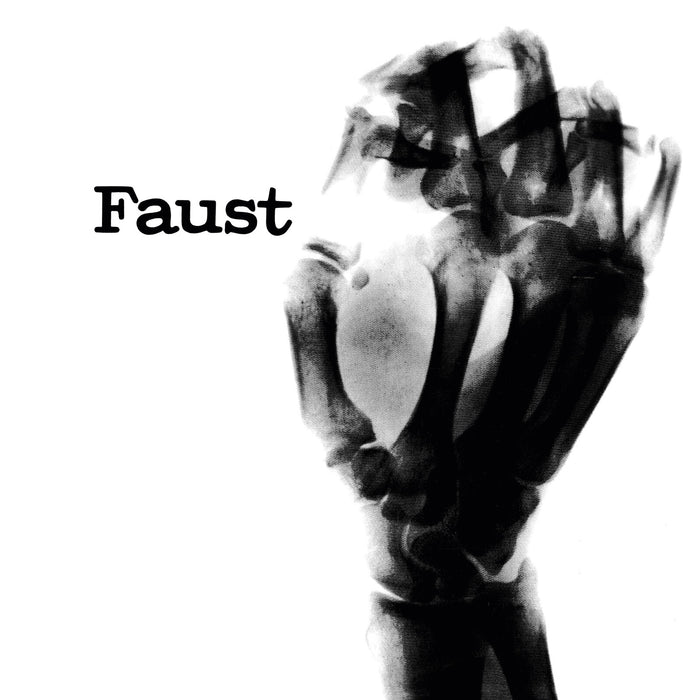
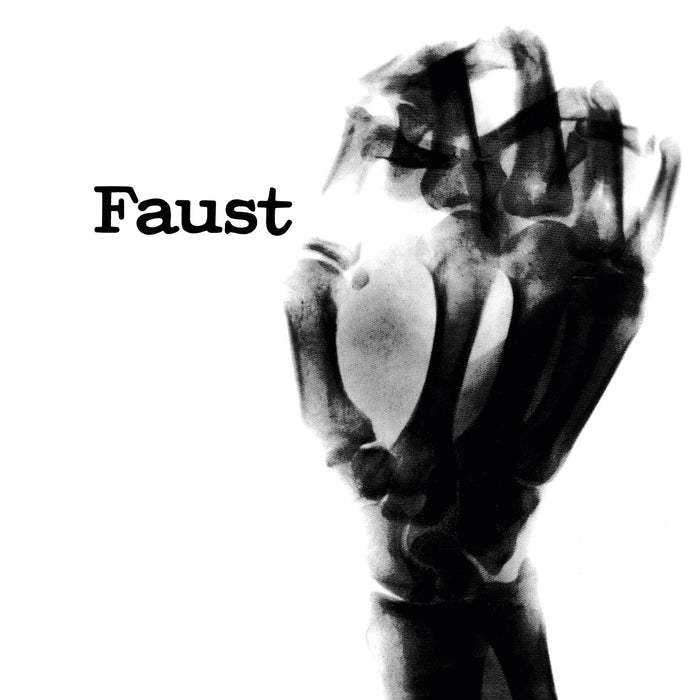
    Over the years, Faust has become many things, distinct as fingers, yet united as the hand that forms the fist. This series of new LPs on Bureau B sees each living member of the legendary 1971-1974 line up present their own interpretation of the Faustian myth, working alone or with collaborators to create new material that reflects their contemporary vision of what Faust can be. For Wusthoff, music began long before Faust. As a child he watched his father lose himself in music, playing accordion renditions of operettas, film themes and folk songs with complete absorption. At eleven he discovered jazz through a radio programme tracing its history, then taught himself guitar and piano as a teenager, developing an instinctive relationship with sound driven by curiosity rather than convention. That outlook would become central to Faust, not simply as a band but as an enduring way of thinking. Reflecting on those formative years, Wusthoff describes them as the experience that shaped everything that followed: without Faust, he says, he would never have made this record in the way he has today. Produced by Onnen Bock alongside Bureau B's Gunther Buskies, Fliegen Lernen continues that philosophy. Drawn from decades of archived recordings, new studio experiments and collaborations with musicians in Hamburg, it is a living extension of Faust's open-ended creative spirit. Ideas emerge through chance as much as intention, with sounds, words and stories setting one another in motion until they gradually find their own form. Its title, simultaneously suggesting "flies are learning" and "learning to fly", perfectly captures the playful shifts in perspective that have long defined Wusthoff's work. Throughout Fliegen Lernen, Wusthoff revisits and reimagines ideas that have animated his career for more than half a century. Much of the material grew from electronic sequences discovered in his archive, some echoing the patterns behind the homemade "Spieluhr" frequency-divider and sequencer he built during his Faust years. Opener "Horst Du Die Schritte" crashes jerky piano figures into a wiry punk-funk groove, with rhythmic saxophone and deadpan vocals creating something stranger than No Wave but irresistibly danceable. "Sonntag Nachmittag" drifts into electroacoustic territory, balancing synthetic textures, live drums and melancholic piano motifs, while "Charm Quarks Boogie" offers a brief detour into clipped digital minimalism. Tracks such as "Down, Down And Come To Me" and the title piece lock into mechanical funk rhythms filled with squealing saxophone, bubbling electronics and spoken-word passages, locating a contemporary version of the playful tension that always defined Faust. Elsewhere the album reveals a more atmospheric and exploratory side. "Sandra Tanzt" unfolds like a shadowy soundtrack, while "Sendepause" transforms kosmische textures into weightless funk. "Erstbesteigung" emerged from an improvised session featuring Wusthoff on MS-20 and Faust's original ARP 2600, gradually dissolving language itself into streams of fragmented syllables. The haunting "Schongang" recalls fourth-world ambience and late-night jazz introspection, before closing track "Ganz Gut, Oder" expands into a stomping, hallucinatory desert-psych excursion. Throughout it all, the ordinary becomes a source of invention. Vacuum cleaner hoses become rhythmic loops, rubber gloves squeak in the bath, shells and stones are rubbed together for texture, while a simple encounter with a fly in the kitchen becomes the basis for the album's title track. By turns humorous, reflective, cinematic and groove-driven, Fliegen Lernen demonstrates that Wusthoff's creative imagination remains as restless as ever. Rather than recreating the past, it embodies the same openness that made Faust so singular in the first place: a belief that any sound, object or passing observation can become the spark for something unexpected. More than fifty years after those formative experiments, Wusthoff continues to approach music as an act of curiosity, collaboration and continual discovery.

    Description

    Over the years, Faust has become many things, distinct as fingers, yet united as the hand that forms the fist. This series of new LPs on Bureau B sees each living member of the legendary 1971-1974 line up present their own interpretation of the Faustian myth, working alone or with collaborators to create new material that reflects their contemporary vision of what Faust can be. For Wusthoff, music began long before Faust. As a child he watched his father lose himself in music, playing accordion renditions of operettas, film themes and folk songs with complete absorption. At eleven he discovered jazz through a radio programme tracing its history, then taught himself guitar and piano as a teenager, developing an instinctive relationship with sound driven by curiosity rather than convention. That outlook would become central to Faust, not simply as a band but as an enduring way of thinking. Reflecting on those formative years, Wusthoff describes them as the experience that shaped everything that followed: without Faust, he says, he would never have made this record in the way he has today. Produced by Onnen Bock alongside Bureau B's Gunther Buskies, Fliegen Lernen continues that philosophy. Drawn from decades of archived recordings, new studio experiments and collaborations with musicians in Hamburg, it is a living extension of Faust's open-ended creative spirit. Ideas emerge through chance as much as intention, with sounds, words and stories setting one another in motion until they gradually find their own form. Its title, simultaneously suggesting "flies are learning" and "learning to fly", perfectly captures the playful shifts in perspective that have long defined Wusthoff's work. Throughout Fliegen Lernen, Wusthoff revisits and reimagines ideas that have animated his career for more than half a century. Much of the material grew from electronic sequences discovered in his archive, some echoing the patterns behind the homemade "Spieluhr" frequency-divider and sequencer he built during his Faust years. Opener "Horst Du Die Schritte" crashes jerky piano figures into a wiry punk-funk groove, with rhythmic saxophone and deadpan vocals creating something stranger than No Wave but irresistibly danceable. "Sonntag Nachmittag" drifts into electroacoustic territory, balancing synthetic textures, live drums and melancholic piano motifs, while "Charm Quarks Boogie" offers a brief detour into clipped digital minimalism. Tracks such as "Down, Down And Come To Me" and the title piece lock into mechanical funk rhythms filled with squealing saxophone, bubbling electronics and spoken-word passages, locating a contemporary version of the playful tension that always defined Faust. Elsewhere the album reveals a more atmospheric and exploratory side. "Sandra Tanzt" unfolds like a shadowy soundtrack, while "Sendepause" transforms kosmische textures into weightless funk. "Erstbesteigung" emerged from an improvised session featuring Wusthoff on MS-20 and Faust's original ARP 2600, gradually dissolving language itself into streams of fragmented syllables. The haunting "Schongang" recalls fourth-world ambience and late-night jazz introspection, before closing track "Ganz Gut, Oder" expands into a stomping, hallucinatory desert-psych excursion. Throughout it all, the ordinary becomes a source of invention. Vacuum cleaner hoses become rhythmic loops, rubber gloves squeak in the bath, shells and stones are rubbed together for texture, while a simple encounter with a fly in the kitchen becomes the basis for the album's title track. By turns humorous, reflective, cinematic and groove-driven, Fliegen Lernen demonstrates that Wusthoff's creative imagination remains as restless as ever. Rather than recreating the past, it embodies the same openness that made Faust so singular in the first place: a belief that any sound, object or passing observation can become the spark for something unexpected. More than fifty years after those formative experiments, Wusthoff continues to approach music as an act of curiosity, collaboration and continual discovery.