Description
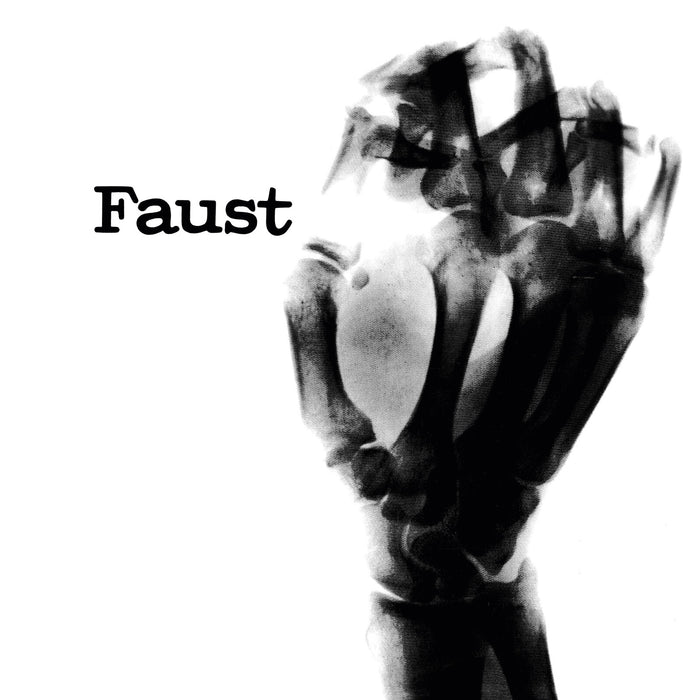
Over the years, Faust has become many things, distinct as fingers, yet united as the hand that forms the fist. This series of new LPs on Bureau B sees each living member of the legendary 1971-1974 line up present their own interpretation of the Faustian myth, working alone or with collaborators to create new material that reflects their contemporary vision of what Faust can be. Since childhood, Jean-Herve Peron has embraced creativity wherever he finds it. Whether duetting with the sound of his footsteps, collaborating with cement mixers or experimenting with whatever instrument he can get his hands on, play is at the heart of everything he does. This new album gathers ideas, memories and unfinished projects accumulated across his whole lifetime. Its tongue-in-cheek subtitle, 'Maybe Of Interest', offers a typically Peronian joke: MOI can suggest a certain self-confidence or egocentrism, yet the subtitle gently undercuts it, revealing the vulnerability, humour and self-awareness that run throughout the record. In fact, MOI is anything but solitary. Credited to FaUSt, with the "US" deliberately capitalised, the record reflects Peron's belief in collaboration, friendship and collective creativity, bringing together a wide network of musicians, engineers, writers and performers from across the extended Faust family. In fact, more than twenty people contributed to the recording sessions, making MOI as much a collective endeavour as a personal statement. Recorded over two winter weeks at Schiphorst studio in northern Germany and deftly combining the contradictory forces of meticulous planning, free improvisation and chance discovery, MOI draws equally from childhood memories, Fluxus principles, dadaist humour and deeply personal experiences. The resulting album moves effortlessly between musique concrete, avant-pop, jazz, spoken word and experimental electronics, united by Peron's curiosity and irrepressible sense of play. From the opening collage of "Charles et Leon", assembled from electronics, tape manipulations, found sounds and francophone samples, MOI inhabits a world where memory, accident and invention continually overlap. "Diabolus in Musica" transforms a chance encounter with the infamous tritone into an unlikely avant-pop miniature, while "Splash!" revels in multilingual voices, backmasked fragments and restless rhythmic movement. Elsewhere, Fluxus-inspired pieces such as "Metro Nomen" and the spoken-word meditation "Make Me Up" explore identity, language and the creative possibilities of disruption. Balancing the album's experimental impulses are some of Peron's most emotionally direct compositions. "Du Fehlst Mir", written following the loss of a beloved companion, unfolds as a moving late-night jazz ballad, while "Telele" draws on childhood influences to create an atmosphere that is by turns choral, dreamlike and unsettling. The spacious jazz textures of "Quinten & Quarten", the shifting beauty and abrasion of "L'Orchestre des Anges", and the socially conscious reflections of "Writings On The Wall" further demonstrate the remarkable breadth of Peron's musical vocabulary.
The album closes with "Doux Ami", which moves from sombre introspection towards a joyful communal celebration, encapsulating the spirit that runs through MOI.
Throughout the record, Jean-Herve Peron presents FaUSt as a living network of friendships, ideas and creative exchanges.